
Supporting a perpetrator safely
This area is for making a referral to the Your Choice Project. It provides guidance for professionals working with people who may be using abusive behaviours in intimate or family relationships, supporting safe, consistent responses that promote accountability, reduce harm, and keep survivors and children at the centre of decision-making.
Steps to supporting someone using abusive behaviours
This section provides professionals with practical steps for supporting someone using abusive behaviours. It explores recognising abuse, having safe conversations, promoting accountability, understanding risk, making appropriate referrals, and responding in ways that prioritise survivor safety and encourage positive change.
Recognising abuse
Identify behaviours that may indicate coercive control, intimidation, financial abuse, stalking or other forms of domestic abuse.

Safe conversations
Use open questions and professional curiosity to explore relationships, conflict, fear, and patterns of behaviour safely.

Accountability and recording concerns
Respond in ways to promote accountability, challenge minimisation and blame, and record concerns clearly. Good recording supports safeguarding, risk management, and effective responses to abusive behaviours.

Safety and risk
Keep survivors and child safety central, recognise escalating risk, and follow safeguarding procedures.

Getting specialist support
Know when to refer to a specialist domestic abuse perpetrator service and work alongside safeguarding partners.

Your Choice Project
The Your Choice Project (YCP) supports people who want to change harmful behaviour towards a partner, ex-partner or family member, helping to build safer, healthier relationships while prioritising survivors’ wellbeing.

Your Choice Project
The Your Choice Project (YCP) is a behavioural change programme for people who have used harmful behaviour toward a partner, ex-partner or family member and want to change. We support safer, healthier relationships through constructive, supportive interventions that encourage lasting positive change while continuing to prioritise survivors’ wellbeing and safety.


Recognising abuse
Professionals may notice behaviours that suggest coercive, controlling, or abusive behaviour. Abuse is often identified through patterns rather than isolated incidents. Consider the impact on the survivor, including fear, isolation, loss of independence, or changes in behaviour. If concerns arise, consider safety, safeguarding, and specialist support.
- Monitoring a partner’s movements, phone, finances, or social contact.
- Intimidation, threats, aggression, or damage to property.
- Blaming others, minimising abuse, or justifying behaviour.
- Stalking, harassment, unwanted contact, or using children to exert pressure.

Safe conversations
Create a calm, private, and non-judgemental environment whenever possible. Use professional curiosity to explore relationships, conflict, fear, and control. Listen carefully and avoid rushing to conclusions. The aim is to understand patterns of behaviour, assess risk, and encourage engagement with appropriate support while maintaining professional boundaries.
- Ask open questions such as “Can you tell me what happens during disagreements?”
- Explore what happens before, during, and after incidents.
- Avoid arguing, blaming, or attempting to investigate the full incident.
- Be clear about confidentiality, safeguarding responsibilities, and information sharing.
Accountability and recording concerns
Supporting someone using abusive behaviours does not mean excusing their actions. Professionals should promote accountability, challenge minimisation and blame, and maintain clear boundaries. Recording concerns accurately and factually supports safeguarding, risk management, and information sharing. Document behaviours, disclosures, and decisions clearly to support effective responses.
How should I record concerns about someone using abusive behaviours?
Record concerns clearly, factually, and promptly. Include what you have observed, what has been disclosed, the impact on victim-survivors or children, any identified risks, and actions taken. Avoid language that minimises abuse or places responsibility on the victim-survivor.
Where should I record safeguarding concerns?
Professionals should follow their organisation’s safeguarding procedures. Concerns about children should be shared through the Multi-Agency Safeguarding Hub (MASH) and relevant safeguarding pathways. Where a survivor is identified as being at high risk of serious harm or homicide, consider a referral to the Multi-Agency Risk Assessment Conference (MARAC) process.
What should I include when recording abusive behaviours?
Focus on behaviours, patterns, and impact. Record specific examples, dates, relevant conversations, risk indicators, and any safeguarding decisions. Distinguish between facts, professional observations, and the person’s own account.
What if the person denies or minimises their behaviour?
Record their response alongside your professional observations. Denial, justification, or minimisation may be important information when assessing risk, understanding patterns of behaviour, and planning an appropriate response.
Safety and risk
Keeping survivors and child safety central is essential when supporting someone using abusive behaviours. Professionals should consider risk, escalation, and potential harm. Understanding risk indicators and following safeguarding procedures are key. For further guidance on supporting those affected by domestic abuse, explore our guidance on supporting a survivor.
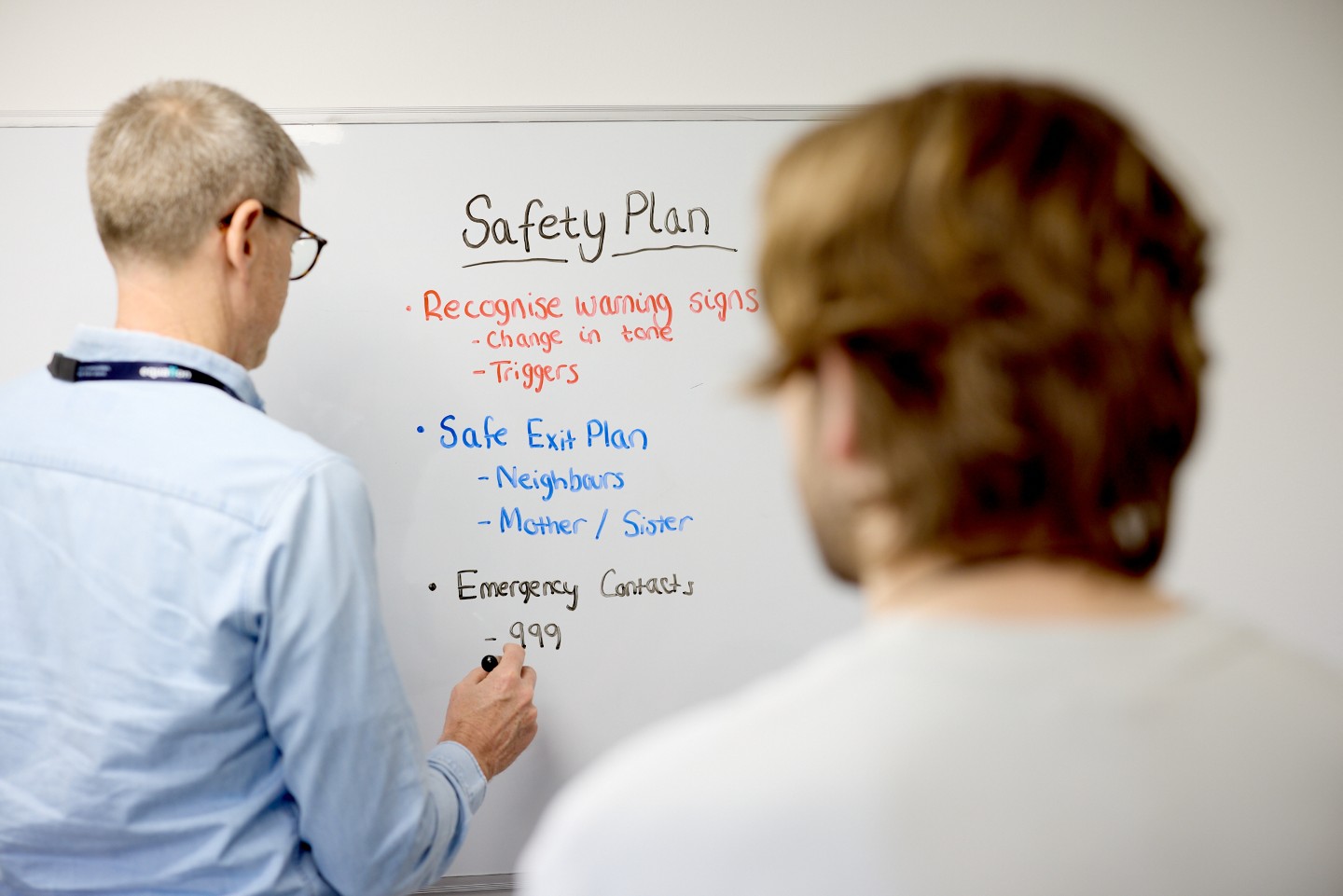
Explore: Recognising and Responding
to Perpetrators of Domestic Abuse Training

Understanding & Responding to Domestic Violence & Abuse – F2F – County
26/01/27
£0-£35

Working with Men Experiencing Domestic Abuse (County) – Online
11/03/27
£0-£35

Working with Children Impacted by Domestic Abuse – Remote – City
11/03/27
£0-£35

Technology & Economic Abuse: “One of the Greatest Forms of Control” -County
03/03/27
£0-£35

Recognising Perpetrators of Domestic Abuse: Understanding & Theory (Online)
03/11/26
£0-£35
Getting specialist support
Equation can support professionals who are unsure about next steps, including discussing complex cases and exploring whether a referral to the Your Choice Project is appropriate. Contact our team for advice, guidance, and support with referrals.


Submit your referral below
We’ll contact you within 1–2 working days. For your safety, your information won’t be saved unless you submit the form. If you’re in immediate danger or need urgent help, call 999.