
Not sure if it’s abuse? We can help you understand
Working out whether what you’re experiencing is abuse can feel confusing and frightening. Domestic abuse isn’t always physical — it can be about control, fear or isolation too. These pages explain what abuse can look like, so you can understand what’s happening and know that support is here.
Signs of abuse
Something doesn’t feel right, but you can’t quite put your finger on it? That’s a completely valid place to start from. This guide walks through the everyday signs of abuse, so you can start building a clearer picture of what’s going on.

Support that starts with belief
“I felt heard and understood and it took away the feeling of isolation and stopped me questioning my own perception of what I was experiencing. The support was offered in a way which empowered me to make my own decisions and validated my emotions”
LGBTQ Survivor
After using our helpline

Talk us through what’s going on
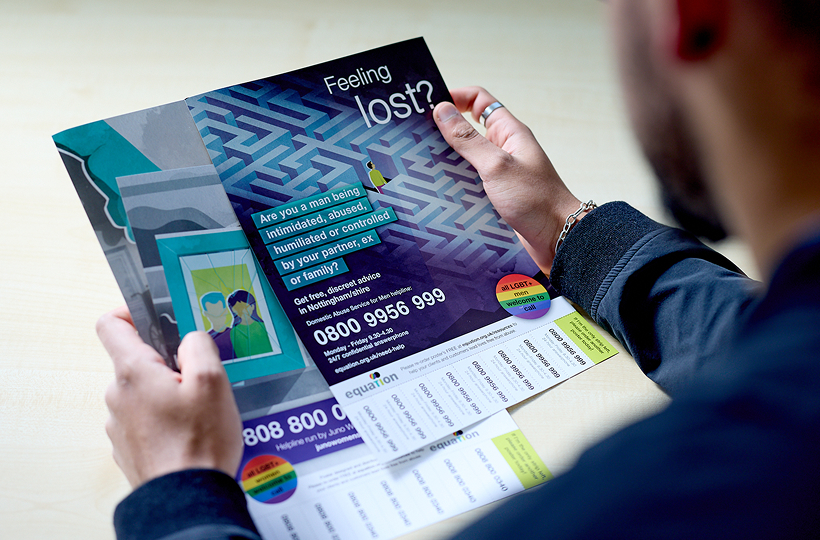
Sometimes the hardest part is finding the words. Our team can help you talk through what’s happening, understand whether it’s abuse, and explore your options, whenever you’re ready. We’re here Monday – Friday, 9.30am to 4.30pm, excluding bank holidays (7.30pm on Wednesdays) – 24/7 answerphone available outside these hours.
Equation’s Men’s Helpline
0800 9956 999Equation’s LGBTQ Helpline
03300 880787
Frequently asked questions
Not sure where to start? These are the questions we’re asked most often about domestic abuse, recognising it, and reaching out. If you can’t find what you need here, get in touch — we’re happy to talk it through.
Who can experience domestic abuse?
Anyone — whatever your age, gender, sexuality, background or relationship type. It can happen with a partner, ex-partner, or family member, in any kind of relationship.
What is coercive control?
A pattern of behaviour where someone repeatedly makes you feel controlled, dependent, isolated or scared, gradually undermining your confidence and independence over time.
What is digital or online abuse?
Monitoring your accounts, devices or location, sharing images without consent, or using technology to track, control or frighten you.
How do I know if I need support?
If something in your relationship feels controlling, frightening or wrong, that’s reason enough to reach out. You don’t need to be certain it’s abuse first.
Is domestic abuse always physical?
No. It’s about control, not just violence. It can include emotional, psychological, sexual or financial abuse, as well as physical harm.
What counts as financial or economic abuse?
Someone controlling your money, access to income, work, or basic essentials like food and transport, in ways that limit your freedom and independence.
Is stalking a form of domestic abuse?
It can happen alongside domestic abuse or on its own. It’s a pattern of unwanted contact or attention that makes you feel threatened or scared.
Is getting in touch confidential?
Yes. You can talk to us in confidence, at your own pace, whatever you decide to do next.